
Where Is Ibogaine Treatment Legal?
Where is ibogaine treatment legal? This is one of the most important questions for people researching ibogaine-assisted treatment, particularly because ibogaine laws differ considerably from one country to another. A country may allow possession but restrict medical administration, while another may permit prescription use without broadly licensing commercial treatment centers.
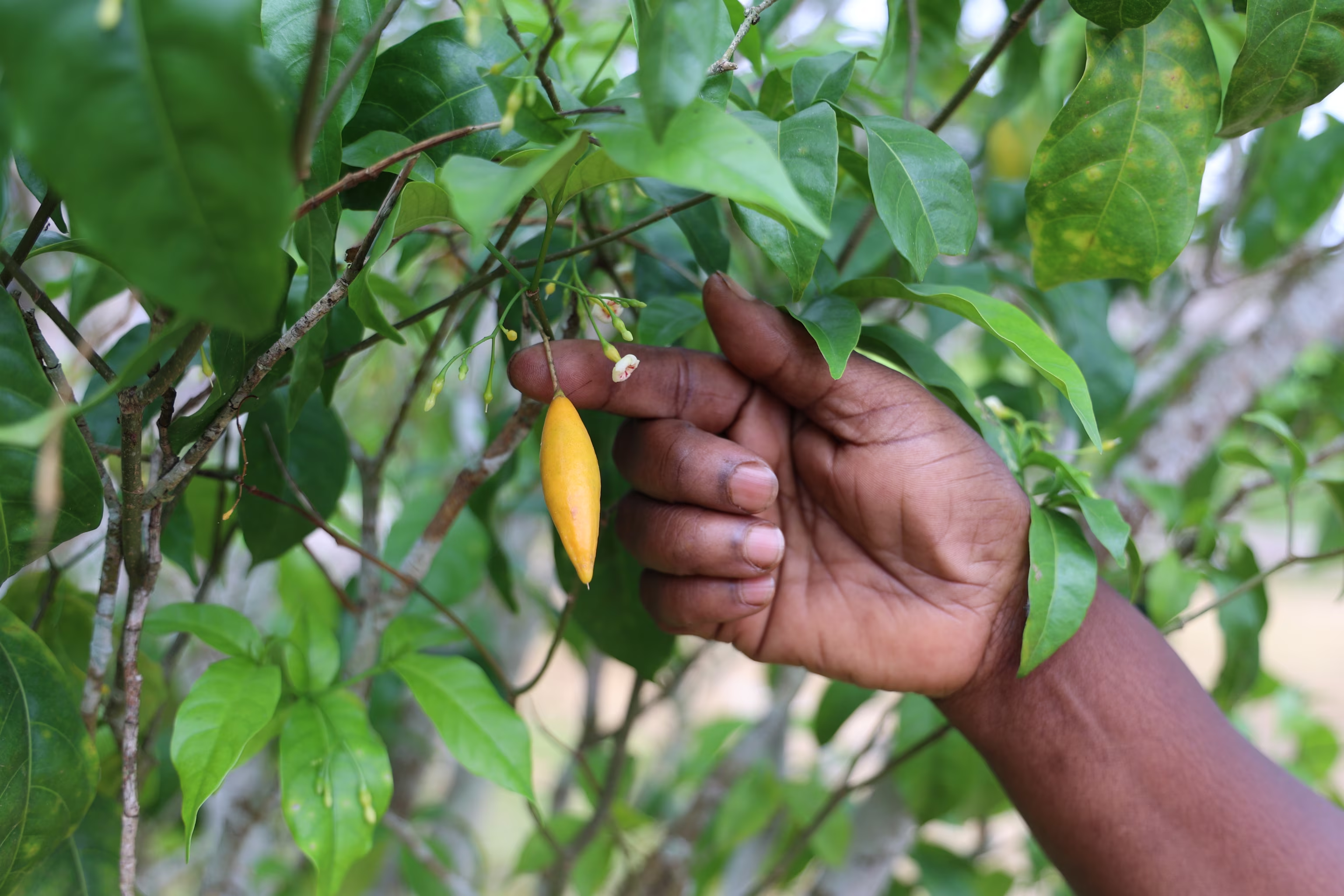
Ibogaine is a naturally occurring alkaloid derived from Tabernanthe iboga, a plant native to Central and West Africa. Researchers have investigated ibogaine for substance use disorders, withdrawal, cravings, and other conditions. However, the evidence remains limited, and ibogaine can produce serious cardiovascular complications. The International Narcotics Control Board notes that ibogaine is not internationally controlled under the major UN psychotropic-substances convention, leaving individual countries to establish their own rules.
This guide explains where ibogaine treatment may be legally accessible, where ibogaine remains prohibited, and why legal status should always be verified before considering treatment or travel.
Understanding Ibogaine Legal Status
The phrase “ibogaine is legal” can be misleading.
There are several different regulatory categories:
- Legal or unscheduled: National law does not specifically prohibit ibogaine, although other medical, pharmaceutical, or consumer-protection laws may still apply.
- Prescription or medically controlled: Qualified healthcare professionals may be able to prescribe or administer ibogaine under specific regulations.
- Restricted: Possession or administration may require authorization, licensing, or special medical circumstances.
- Decriminalized: Certain possession offenses may carry reduced criminal penalties without creating a legal framework for medical treatment.
- Prohibited: Possession, manufacture, sale, importation, or administration may be unlawful.
Consequently, finding a country where ibogaine is “legal” does not automatically mean that an individual can legally purchase ibogaine or attend an unlicensed treatment center.
Where Is Ibogaine Treatment Legal?
The international situation changes periodically, but several countries are commonly discussed in connection with ibogaine access.
Mexico
Mexico is frequently associated with ibogaine treatment because ibogaine is not specifically scheduled in the same way it is in the United States. This has allowed treatment centers to operate, although the absence of a specific prohibition should not be confused with comprehensive medical regulation.
People considering treatment in Mexico should investigate the credentials of the provider, emergency medical arrangements, cardiac screening, medication interactions, and post-treatment support.
Mexico is therefore better described as a country with relatively accessible ibogaine treatment in a regulatory gray area, rather than as a country with a standardized national ibogaine-treatment system.
New Zealand
New Zealand has historically provided one of the clearest medical pathways for ibogaine. Ibogaine has been treated as a prescription medicine, meaning access can occur within a medical framework rather than simply through an unregulated retreat model.
This distinction is important because medical supervision can provide opportunities for appropriate screening and monitoring. However, prescription status does not mean ibogaine is suitable for everyone.
South Africa
South Africa has placed ibogaine within a controlled medicines framework. Sources describing its regulatory status identify ibogaine as a Schedule 6 substance requiring medical oversight.
For anyone researching ibogaine treatment in South Africa, the important question is therefore not simply whether ibogaine is “legal,” but whether the particular practitioner and treatment setting are authorized to administer it.
Brazil
Brazil is sometimes included in lists of countries offering ibogaine treatment, but its regulatory situation requires particular care.
Brazil’s federal health authority, ANVISA, has stated that ibogaine has not been approved for therapeutic use and that commercialization of the substance in Brazil is prohibited. The Brazilian government’s information also highlights concerns regarding serious adverse effects and reported deaths associated with ibogaine administration. (Serviços e Informações do Brasil)
Therefore, Brazil should not simply be described as a country where anyone can legally purchase or receive ibogaine treatment. Regulations and medical authorization matter.
Portugal
Portugal is often mentioned in discussions about ibogaine because of its broader drug-decriminalization framework. However, decriminalization is not the same as legal medical treatment.
Portugal’s approach generally concerns the criminal consequences associated with possession of certain drugs. It does not automatically establish an approved medical pathway for ibogaine therapy.
Anyone researching ibogaine in Portugal should distinguish between personal possession laws, treatment-center operations, medical regulations, and commercial sale.
The Netherlands
The Netherlands has historically been associated with ibogaine and iboga treatment centers. However, the regulatory situation is more complicated than online treatment directories sometimes suggest.
The absence of a substance-specific prohibition does not necessarily mean that an unlicensed provider can legally administer ibogaine as a medical treatment. Previous legal cases and safety concerns demonstrate why people should not assume that a treatment center operating publicly is automatically medically authorized.
Where Is Ibogaine Illegal?
United States
Ibogaine remains federally prohibited in the United States as a Schedule I controlled substance. This means that conventional clinical ibogaine treatment is not legally available in the same manner as an FDA-approved prescription medicine.
Some U.S. jurisdictions have adopted broader psychedelic decriminalization policies, but local policies do not automatically override federal controlled-substance law.
Research is continuing, and legislative activity is also developing. For example, an Oregon legislative proposal considered a controlled medical pathway for ibogaine beginning in 2027 under specified conditions. A proposal, however, should not be confused with current nationwide legal access.
France
France prohibits ibogaine and iboga-containing preparations under its controlled-substance framework. Consequently, people should not assume that traveling to France provides a legal route to ibogaine treatment.
Belgium, Denmark, Hungary, Ireland, Italy, Norway, Sweden and Switzerland
Several European countries have also placed ibogaine under controlled-substance laws. ICEERS identifies the United States and several European countries among jurisdictions where ibogaine is prohibited.
Because regulations can change, travelers should confirm the current rules with the relevant national health or medicines authority before transporting any ibogaine-containing material.
What About Canada?
Canada requires careful consideration because ibogaine’s status should not be reduced to a simple “legal” or “illegal” label.
Controlled-substance and medical-product regulations can affect possession, importation, prescribing, and administration differently. Some sources describe restricted medical access rather than unrestricted availability.
Anyone considering ibogaine treatment in Canada should obtain current information from Canadian regulatory authorities and a qualified healthcare professional rather than relying on an online clinic directory.
What About Cameroon and Traditional Iboga?
Cameroon and other Central African countries deserve separate consideration because iboga has longstanding cultural and traditional significance in the region.
However, traditional use of iboga does not automatically mean that commercially prepared ibogaine is legally available for medical treatment.
Cameroon’s laws concerning genetic resources and associated traditional knowledge can also affect the collection, use, and export of biological resources. Cameroon Law No. 2021/014 establishes requirements concerning access to genetic resources and associated traditional knowledge, including prior informed consent and mutually agreed terms in relevant circumstances.
Therefore, anyone involved in sourcing iboga or iboga-derived products should verify applicable local requirements concerning harvesting, processing, commercialization, and international export.
Is Ibogaine Treatment Safe?
Legal status and medical safety are two different questions.
Ibogaine can affect the cardiovascular system, including cardiac electrical activity. Serious complications have been reported, and deaths have been associated with ibogaine administration. Brazilian health authorities specifically highlight reports of severe adverse effects and sudden death. (Serviços e Informações do Brasil)
A responsible treatment assessment should therefore consider:
- Medical history
- Current medications
- Heart rhythm and cardiovascular health
- Electrolyte abnormalities
- Liver and kidney function
- Previous substance use
- Potential medication interactions
- Emergency medical availability
- Appropriate monitoring during treatment
- Aftercare and follow-up
People should never assume that a treatment is safe merely because it is available in a particular country.
How to Choose an Ibogaine Provider
If you are researching where is ibogaine treatment legal, the next step should be evaluating the provider rather than simply choosing the easiest destination.
Look for transparent information about:
Medical screening
A responsible provider should explain its screening process before treatment. Cardiac assessment is particularly important because ibogaine can affect heart rhythm.
Qualified professionals
Ask who supervises treatment and what medical qualifications they hold. A retreat facilitator and a licensed medical professional are not interchangeable.
Emergency planning
Ask what happens if a patient develops a serious cardiovascular or neurological complication. A reputable facility should have a clear emergency protocol.
Medication review
Ibogaine can interact with other substances. A provider should therefore review prescription medications, over-the-counter medicines, supplements, and recreational substances before treatment.
Transparent information
Avoid providers that promise guaranteed addiction cures, instant recovery, or risk-free treatment. The scientific evidence remains incomplete, and exaggerated medical claims are a warning sign.
Researching Premium Ibogaine Products
For people researching premium ibogaine products, Ibogainee.com can be included in your research process as a source of product and educational information. However, product availability and legality depend on the country where the purchaser is located.
Before obtaining or transporting any ibogaine-containing product, verify the applicable laws concerning possession, importation, exportation, prescribing, and medical use. A product being available online does not establish that its purchase or shipment is lawful in your jurisdiction.
It is also important to distinguish product quality from medical safety. A certificate of analysis can provide information about composition and testing, but it does not establish that ibogaine is medically appropriate for a particular person.
Why Ibogaine Laws Differ Around the World
Ibogaine was not placed under international control by the 1971 UN Convention on Psychotropic Substances. As a result, national governments have taken very different approaches.
Some countries regulate ibogaine as a medicine. Others classify it as a controlled substance. Some have no specific ibogaine legislation, while others prohibit it entirely.
This explains why online searches can produce apparently contradictory answers about where is ibogaine treatment legal.
The legal classification can also change over time. For example, Australia’s regulatory treatment has changed substantially, demonstrating why older blog posts and clinic websites may no longer accurately describe current law.
Frequently Asked Questions About Ibogaine Legality
Is ibogaine legal?
Ibogaine is legal or accessible under specific conditions in some countries, while other jurisdictions prohibit it. The exact rules depend on national legislation and sometimes regional regulations.
Where is ibogaine treatment legal?
Mexico, New Zealand and South Africa are among the countries frequently identified in discussions of legal or medically regulated ibogaine access. Other countries may have less clearly defined regulatory environments. Legal access does not necessarily mean unrestricted commercial treatment.
Is ibogaine legal in the United States?
No. Ibogaine remains federally prohibited in the United States as a Schedule I controlled substance. Research is continuing, and some states are considering alternative regulatory approaches, but this does not currently create nationwide legal clinical access.
Is ibogaine legal in Mexico?
Ibogaine is not specifically scheduled in Mexico in the same way it is in the United States, and treatment centers operate there. However, the absence of specific scheduling should not be interpreted as equivalent to a nationally standardized medical-licensing framework.
Is ibogaine legal in Canada?
Canada has restrictions surrounding ibogaine and does not provide unrestricted access to ibogaine treatment. Regulatory requirements can depend on the circumstances, so current Canadian guidance should be checked before treatment or importation.
Is ibogaine legal in Brazil?
Brazilian authorities state that ibogaine is not licensed for therapeutic use and that commercialization is prohibited. People should therefore not rely on older websites claiming that Brazil provides unrestricted legal ibogaine treatment. (Serviços e Informações do Brasil)
Can I travel internationally for ibogaine treatment?
Some people travel to jurisdictions where ibogaine has a different legal status. However, travelers should independently verify the destination country’s current regulations, immigration requirements, medical standards, and rules governing the import or export of controlled substances.
Is ibogaine FDA approved?
Ibogaine is not an FDA-approved treatment for addiction or other medical conditions in the United States. Its clinical development remains an area of research.
Does ibogaine cure addiction?
Current evidence does not justify describing ibogaine as a guaranteed cure for addiction. Research has produced promising findings concerning withdrawal and cravings, but larger and better-controlled studies are needed.
Is ibogaine treatment safe?
Ibogaine carries potentially serious risks, particularly cardiovascular risks. Anyone considering treatment should undergo appropriate medical screening and receive professional medical advice rather than treating legal availability as proof of safety.
How can I find legal ibogaine treatment?
Start by identifying the laws in your own country and the destination country. Then verify the provider’s medical credentials, screening procedures, emergency protocols, and regulatory authorization. Avoid relying solely on advertising claims or search-engine rankings.
Final Thoughts
The answer to where is ibogaine treatment legal is more complicated than a simple list of countries. Ibogaine may be prohibited, controlled, prescription-only, decriminalized, or insufficiently regulated depending on the jurisdiction.
For anyone researching ibogaine, legal status, medical safety, provider credentials, and product quality should all be considered separately. Laws can also change quickly, so verify current information with the relevant government health, medicines, or controlled-substance authority before traveling, purchasing, importing, or receiving treatment.
If you are researching premium ibogaine products, Ibogainee.com can be a useful place to review available product information and educational resources. Nevertheless, always confirm that any product or treatment is lawful and medically appropriate where you live before proceeding.
Important: This article is educational and does not constitute medical or legal advice. Ibogaine can cause serious adverse effects and may interact with medications. Speak with a qualified healthcare professional and verify current laws with the appropriate authorities before making decisions about ibogaine.